Fun memory
Fun memory
About This Game
About Fun memory
Within seconds of loading Fun memory on , the core mechanic is already communicating itself. That immediate clarity is a design choice, not an accident — good casual games teach through play rather than lengthy instruction. Fun memory does exactly this, easing players into its system before gradually revealing the depth underneath.
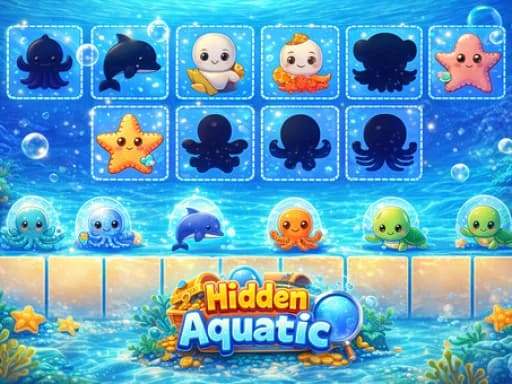
Fun memory uses thematically connected image pairs that create logical associations, making retention feel more natural than arbitrary symbol pairs — the memory challenge is harder but also more satisfying to execute. Whether you're new to casual games or have played dozens of similar titles, that distinction changes the experience in a way that's worth experiencing for yourself.
How to Play Fun memory
Controls are mouse/click on desktop and touch on mobile — immediately functional without a control guide. The first few levels of Fun memory teach the core mechanics implicitly through the level design itself rather than written instructions, which makes the opening feel fluid rather than mandatory.
The honest difficulty trajectory of Fun memory: Fun memory becomes a genuine working memory challenge once the grid expands beyond 4×4 and pairs begin to look visually similar — pattern recognition isn't enough, precise spatial recall is required. Players who build deliberate habits during the comfortable early phase carry those habits into the harder content and find the transition manageable. Players who cruise through on instinct find the same transition unexpectedly sharp.
Why Players Fail in Fun memory — and How to Avoid It
Trying to hold the entire grid in memory at once is the most common failure in Fun memory. Cluster-based memorisation — focus on 3×3 zones and match within them before expanding — is consistently more effective. Identifying this in your own play is more valuable than any tip list, because the fix is targeted rather than generic: adjust that specific decision, not your entire approach.
The most common misunderstanding among new players in Fun memory: Players assume pure memorisation speed is the skill in Fun memory. Strategic card selection — choosing which cards to reveal based on what you already know — is actually more impactful than raw recall speed. This realisation typically arrives naturally after a few sessions, but naming it upfront shortens the adjustment period significantly.
How Fun memory Evolves as You Progress
As Fun memory advances, image similarities between pairs increase — less distinctive pairs require more careful observation during the brief reveal window, elevating the cognitive challenge meaningfully. This evolution is what gives Fun memory staying power beyond the opening hour — there's consistently something new to engage with rather than the same mechanics at higher speed.
What starts feeling easy in Fun memory becomes the foundation that harder content builds on. Players who develop clean habits in those early comfortable levels find themselves naturally equipped when the design demands more from them. This is not an accident — it's the progression architecture working as intended.
Strategy and Tips for Fun memory
- Read before acting: The single highest-value habit in Fun memory is pausing to assess the current state before making any move. Players who react immediately and players who assess first diverge in performance quickly.
- Diagnose failures specifically: After each unsuccessful attempt, identify the precise point of failure — not just that you failed. Specific diagnosis produces targeted improvement; general frustration doesn't.
- Treat easy levels as training: Early comfortable levels in Fun memory are teaching the mechanics that later hard levels will test under pressure. Perfect execution in easy levels builds habits that perform automatically under stress.
- Play in focused, shorter sessions: Cognitive performance in Fun memory declines with fatigue. Three sharp 15-minute sessions produce more skill improvement than a single two-hour tired session.
Is Fun memory the Right Game for You?
Ideal for players who want genuine cognitive exercise in a game format. Also excellent for kids developing working memory skills — the mechanics are immediately understandable at any age.
If you want a free browser game that delivers honest challenge rather than artificial difficulty and genuine reward rather than time-gating, Fun memory is worth at least one session to find out. The zero-friction access on GameFynd — no download, no sign-in, no cost — means the barrier to discovering whether Fun memory is your kind of game is genuinely zero.
Everything on GameFynd is free, browser-based, and works on any device. Check the New Games page for the latest additions or browse the full library to discover your next favourite — no downloads, no accounts, no costs required.
Frequently Asked Questions — Fun memory
Is Fun memory beneficial for children?
Genuinely yes — working memory is a trainable cognitive skill, and Fun memory provides meaningful practice in a format children engage with naturally. Age-appropriate at all levels.
Is Fun memory free to play?
Completely free on GameFynd — no login, no download, instant play.
Does Fun memory have different difficulty settings?
Yes — Fun memory scales from small grids with distinctive images to large grids with visually similar pairs. Difficulty can be matched to your current comfort and challenge level.
What's the most effective strategy in Fun memory?
Players assume pure memorisation speed is the skill in Fun memory. Strategic card selection — choosing which cards to reveal based on what you already know — is actually more impactful than raw recall speed. Zone-based memorisation — focusing on a 3×3 area and matching within it before expanding attention — is consistently more effective than trying to hold the full grid at once.
When does Fun memory become genuinely challenging?
Fun memory becomes a genuine working memory challenge once the grid expands beyond 4×4 and pairs begin to look visually similar — pattern recognition isn't enough, precise spatial recall is required. Players who try to use pure memorisation speed rather than zone-based strategy hit this limit hard.
What is the actual skill being trained in Fun memory?
Working memory and spatial recall. Players assume pure memorisation speed is the skill in Fun memory. Strategic card selection — choosing which cards to reveal based on what you already know — is actually more impactful than raw recall speed. Both skills benefit from regular exercise, and Fun memory provides a genuine workout in an enjoyable format.
What makes Fun memory different from basic memory card games?
Fun memory uses thematically connected image pairs that create logical associations, making retention feel more natural than arbitrary symbol pairs — the memory challenge is harder but also more satisfying to execute.
Meet the Developer
Fun memory was meticulously crafted by , a visionary in the indie gaming space.
Gameplay Experience
More Games

Jelly merge 2026

ULTIMATE CHESS
Toon Blast Puzzle

FinToss
Worm Stack
Ancient Caculate
blocks of color

Run Forrest Run

Maritime Conflict

FumeBurst

Ice Pet Match

Tiles Layer
World Tour